
When I first contacted Jerry Liguori about starting up a site dedicated to the study of the mythical “abieticola” Red-tailed Hawk (www.northernredtails.wordpress.com), I had no idea that I was embarking on a journey that was both a blessing and a curse. Continue reading Note on Northern vs. Eastern Red-tail ID
All posts by eontbird
Birding Tip: Stay on that Bird
‘On’, as in, keep it in your binocular view. While standing along the edge of Greenland Rd. in Dunrobin, Ontario last spring (April 2015), I first spotted the bird in the pic as a distant spec. Troubleshooting began as some candidate hawk species were considered, with the initial lean ending with “female Cooper’s Hawk.” Continue reading Birding Tip: Stay on that Bird
Northern Red-tailed Hawk ID note
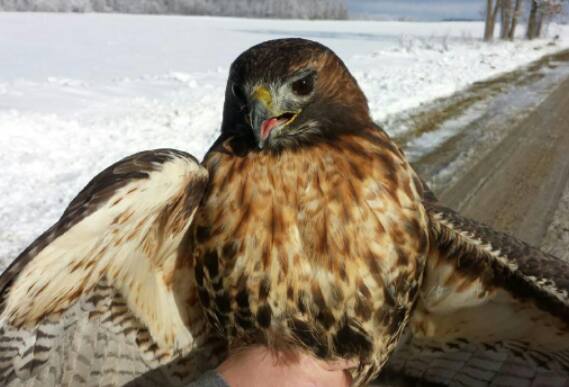
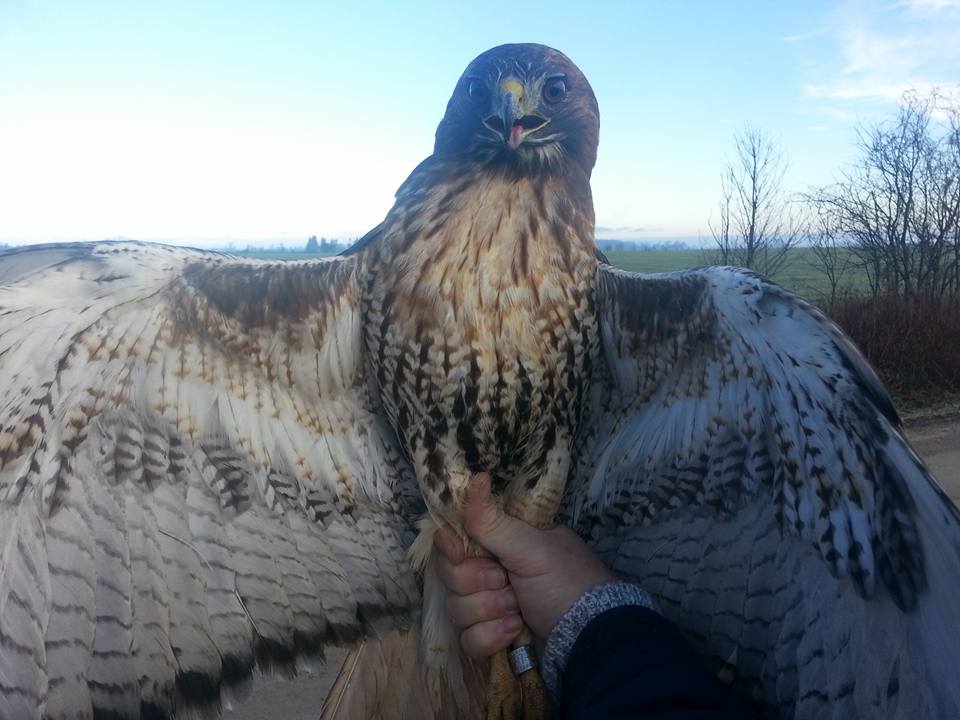
It is possible that here in the east, where we likely see few non-dark morph Western (calurus) Red-tails, heavily-marked and especially colourful Northern (abieticola) birds may tempt birders into categorizing one as a Western. Some of the “light” Northern (abieticola) birds are far from light in the traditional sense and are very orangish-reddish birds below. These birds more or less appear as “Intermediate” in plumage. It is not yet known whether polymorphism exists in the B. j. abieticola subspecies, such as the way it does in the B. j. calurus subspecies, but raptor experts are in agreement that dark morphs are very likely to occur. As ever, Matt Fraker said it best on a thread “Red-tailed Hawks are the Herring Gull of the hawk world.” No two look alike, and sometimes it’s just nice to enjoy their variable appearance and not slap a label on them. For easterners, we are blessed to not have to wrestle with subspecific ID the way that western and central continental birders have to. However, there are still intermediates and intermediates of intermediates, so try to not lose your head over the fine details!
Photo Acknowledgements: I thank Nigel Shaw and Brett Fried of Simcoe County Banding Group for giving prior permission to post these photos (https://www.facebook.com/simcoecountybanding/?fref=ts)



Red-breasted vs. Common Merganser
With Red-breasted (top) the bill appears proportionally quite long and is thin and ever-so-slightly up-turned; the forehead is abrupt and steep; the reddish tones to the head are muted. Look for a lack of white throat patch and a muted red grading through to the lower neck and nape. With Common, the bill is slightly thicker and slightly less up-turned; the bill more or less smoothly transitions to the forehead; the reddish tones to the head are deep. Look for a contrastive white throat patch and a stark delineation between the head and the lower neck (lacks a grading of reddish tones).

Goldeneyes: Cryptic Barrow’s & “Yellow-billed” Common
Hi there,
Today (24 December 2015) I bird-watched along the Rideau River at Strathcona Park. I stayed on the W side of the river and birded from Strathcona S to Hurdman bridge and back. I encountered some birds of interest and wanted to share some photos. Continue reading Goldeneyes: Cryptic Barrow’s & “Yellow-billed” Common
Protected: Analysis of the Hamilton Eastern Kingbird
Bullock’s vs. Baltimore Oriole: females in winter
Hi there,
Drab first-year Baltimore Orioles are a fascinating, and daunting, study. In their 1998 paper detailing female Bullock’s vs. female Baltimore Orioles in the journal, Birding, Cin-Ty Lee and Andrew Birch discuss the following: Continue reading Bullock’s vs. Baltimore Oriole: females in winter
Gulls at the Ottawa Valley Waste Recovery Centre
Hi there,
Today (November 23) from 1020 h to 1300 h, I gull-watched at the Ottawa Valley Waste Recovery Centre in Renfrew County. 6 species of gull including: Iceland (4 kumlieni ), Glaucous (1), Lesser Black-backed (1). I also observed and photographed a first cycle “Nelson’s” Gull. Continue reading Gulls at the Ottawa Valley Waste Recovery Centre
Great Horned Owls in Winter
As fall progresses and winter takes hold, top tier predators such as Great Horned Owls often switch hunting strategies in order to sustain themselves: they wander, often widely, in search of prey. This is especially true of birds in the north (i.e., in the boreal forest region). Continue reading Great Horned Owls in Winter
Raptors at a Distance: shape trumps plumage
One golden rule of thumb that I’ve learned from advanced and expert hawkwatchers is: shape trumps plumage! Plumage details are easily lost at a distance and/or obscured by a variety of lighting conditions. Continue reading Raptors at a Distance: shape trumps plumage